World
Trump's Poll Watchers: Lawsuits Challenge Federal Officers at Voting Sites
Lawsuits accuse the Trump administration of voter intimidation by suggesting federal officers could monitor polling sites.
18 ਸਤੰਬਰ 2026
Decreasing central bank rates by three percentage points frees up enough treasury margin to eliminate crushing fuel levies on working households.
Lowering Pakistan’s central bank policy rate by three percentage points would slash the federal government's domestic debt servicing costs by hundreds of billions of rupees. This spending reduction creates immediate fiscal margin, rendering proposed hikes in petroleum levies unnecessary while protecting consumers from compounding inflationary relief package failures.
Jamaat-e-Islami Amir Hafiz Naeem ur Rehman has placed a concrete mathematical alternative on the national table: a three-percentage-point cut in the benchmark interest rate releases enough fiscal capacity to end petroleum levies altogether. The mechanics of this proposal stem directly from the structure of Pakistan's federal budget. Domestic debt servicing remains the single largest expenditure item in the country's balance sheet, consuming more than half of net federal revenues. Every single percentage point reduction in the key policy rate cuts the government's interest obligation on floating domestic debt by approximately 300 billion to 350 billion rupees annually.
A cumulative reduction of 300 basis points saves the national exchequer close to one trillion rupees over a twelve-month cycle. By contrast, the federal government relies heavily on the petroleum levy—a tax levied directly at the pump—to generate roughly 1 trillion to 1.2 trillion rupees to meet fiscal deficits agreed upon under international loan programs. The choice is clear: the state can either collect hundreds of billions from struggling citizens through inflated petrol and diesel prices, or it can cut its own interest payouts to commercial banks and instantly neutralize the need for exorbitant fuel taxes.
Hafiz Naeem ur Rehman highlighted that political leaders routinely choose the easy path of indirect taxation because it forces ordinary consumers to foot the bill, while private commercial banks continue to reap record profits from risk-free government lending. Redirecting fiscal strategy away from bank payouts and toward tax relief offers an immediate structural buffer for an economy drowning in stagflation.
The current administration's temporary economic relief packages fail because they address the symptoms of inflation rather than its fiscal drivers. Targeted cash transfers and short-term utility discounts reach only a sliver of the population registered under formal welfare databases. Meanwhile, the overwhelming majority of salaried workers, small business owners, and rural labor fall outside these safety nets yet bear the full brunt of indirect taxation.
When fuel prices rise due to elevated levies, transport costs surge across all consumer goods. A minor discount on electricity units during winter months does not compensate a family paying inflated prices for milk, flour, medicine, and daily commute. According to Jamaat-e-Islami's economic policy framework, true relief requires structural reductions in energy and fuel costs rather than cosmetic subsidies that cost billions in administration while delivering negligible benefits to the average kitchen budget.
The policy of keeping interest rates artificially elevated under the pretext of curbing demand-pull inflation has failed in Pakistan. Because inflation in the country is overwhelmingly cost-push—driven by currency devaluation, international commodity spikes, and utility tariff adjustments—high interest rates do not cool prices. Instead, they inflate government borrowing costs and destroy private sector productivity.
High benchmark interest rates have severely constrained commercial credit to the private sector. Small and medium enterprises (SMEs), which form the backbone of urban employment, cannot afford working capital loans at exorbitant rates. Factory closures in industrial hubs like Karachi, Faisalabad, and Gujranwala have accelerated, driving up urban unemployment and shrinking the formal tax base.
When industrial activity contracts, government tax collections from income and sales taxes drop precipitously. To cover this shortfall, the finance ministry repeatedly turns to indirect taxation on inelastic goods—chiefly petroleum products. This reliance creates a destructive cycle: high interest rates swell the government's debt bill, forcing higher fuel levies, which in turn spikes manufacturing costs and drives more businesses into default.
Breaking this cycle requires a decisive shift toward monetary easing. A 3% interest rate cut instantly lowers production costs for domestic industry, encourages capital investment, and expands the tax base through economic activity rather than regressive taxation. Pairing rate cuts with an immediate elimination or scaling back of the petroleum levy would inject purchasing power back into the middle class, stimulating domestic demand and creating a sustainable path toward fiscal stability.
A 3% drop in the policy rate lowers the federal government's annual domestic debt servicing obligations by nearly 1 trillion rupees. This matches the targeted revenue generated from petroleum levies, allowing the state to balance its budget without taxing fuel.
Current relief packages rely on narrow targeted subsidies that exclude the majority of the working middle class. These short-term measures fail to offset the broad cost-of-living increases driven by high petroleum levies and indirect taxes.
High benchmark rates increase borrowing costs for businesses, causing factory shutdowns and reduced commercial output. Shrinking business activity reduces direct tax collection, forcing the government to impose indirect levies on petrol to make up the revenue deficit.
GuruAlpha News Desk
The GuruAlpha News team delivers accurate, timely coverage of breaking news, markets, technology, and lifestyle — in English and Urdu.
Lawsuits accuse the Trump administration of voter intimidation by suggesting federal officers could monitor polling sites.
18 ਸਤੰਬਰ 2026
The Bank of Japan raised its benchmark interest rate to 1.25% to curb persistent inflation driven by global conflicts and energy prices.
18 ਸਤੰਬਰ 2026
Los Angeles prosecutors charged a drug-impaired driver with murder after her SUV blew a red light and crushed a city bus, killing two.
18 ਸਤੰਬਰ 2026
South Korean President Lee Jae Myung publicly rejected US demands to send troops to the Middle East, citing energy security and regional defense priorities.
18 ਸਤੰਬਰ 2026
Nirmeen Noufl’s 12-month extended sentence for dismembering her abusive husband exposes Australia’s complex self-defense laws.
18 ਸਤੰਬਰ 2026
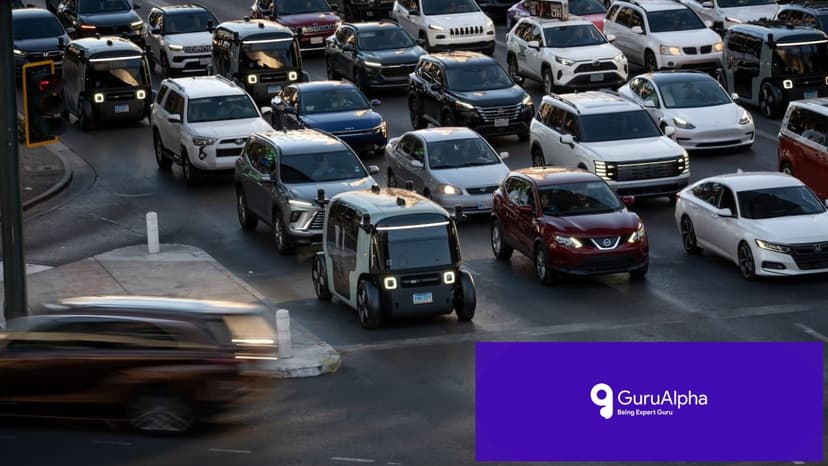
Amazon's Zoox is set to expand its robotaxi fleet beyond 100 vehicles in Nevada, marking a significant shift in autonomous transportation.
18 ਸਤੰਬਰ 2026
USD/PKR at 277.1600. Complete forex analysis with remittance rates for overseas Pakistanis.
18 ਸਤੰਬਰ 2026
Brent at $103.60, WTI at $100.96. Energy market analysis with impact on Pakistan's economy and fuel prices.
18 ਸਤੰਬਰ 2026
Bitcoin at $77,409.00, Ethereum at $2,477.27. Complete crypto market analysis with technical outlook and investment insights.
18 ਸਤੰਬਰ 2026